Overview
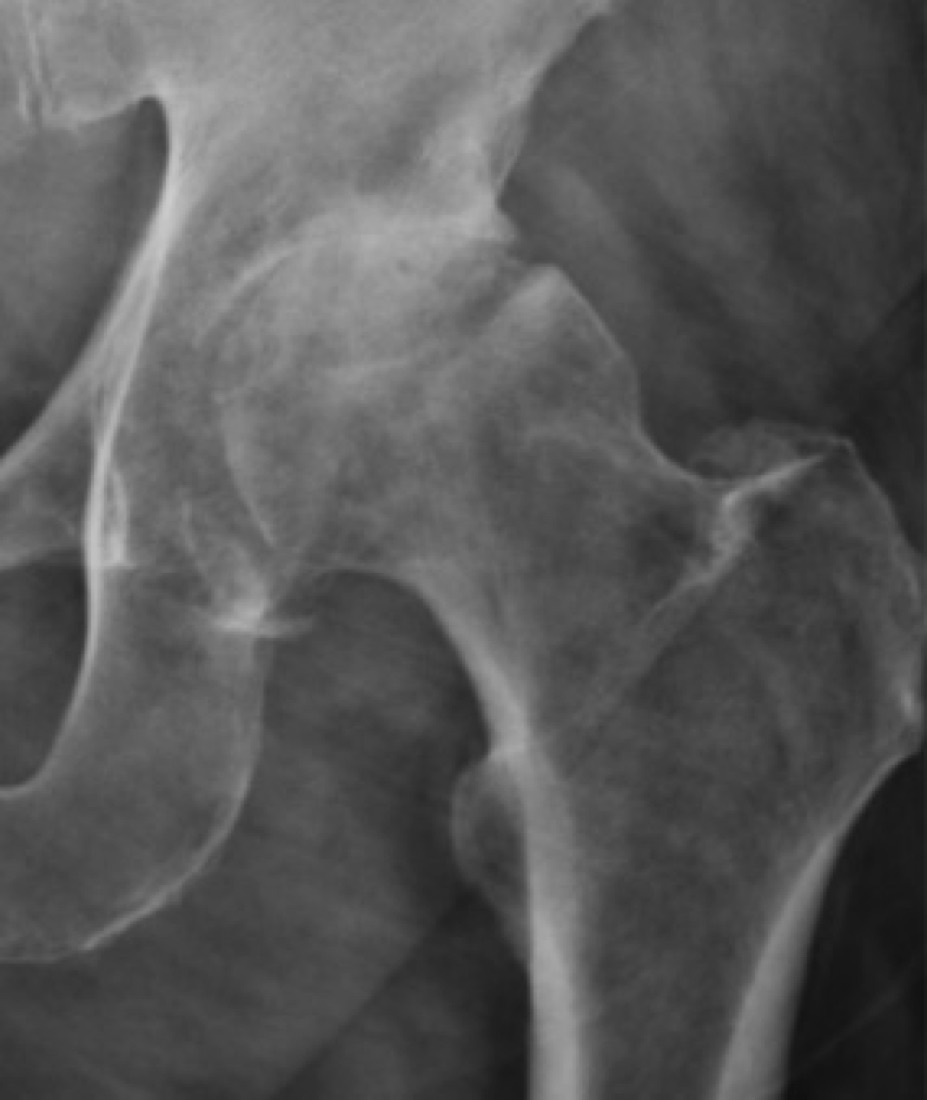
Hip replacement (hip arthroplasty) is a surgical procedure in which severely damaged joint surface cartilage — and, where required, the femoral head and acetabulum — is replaced with artificial components. The aim is to reduce pain permanently and to restore hip function as far as possible. There are two basic types: total hip replacement (THR / THA) and partial hip replacement (hemiarthroplasty). Partial hip replacement is generally preferred in older patients with a hip fracture.
Anatomy of the Hip Joint
The hip is a ball-and-socket joint formed by the rounded head at the upper end of the thigh bone (femoral head) and the cup-shaped socket in the pelvis (acetabulum). The joint surfaces are covered with a lubricating layer of articular cartilage; the joint is stabilised by the labrum, the joint capsule, ligaments and the surrounding muscles (the gluteal muscles, iliopsoas and others).
A healthy hip allows walking, sitting, bending and climbing stairs — the fundamental movements of daily life — without pain.
Total Hip Replacement (THR / THA)
In a total hip replacement both the femoral head and the acetabulum (socket) are replaced with artificial components. A metal or ceramic ball (head) replaces the femoral head, and a polyethylene, ceramic or metal liner seated within a metal shell replaces the acetabulum. Natural joint movement is restored in this way.
- Typical candidates: advanced hip osteoarthritis, inflammatory arthritis (for example rheumatoid arthritis), avascular necrosis, arthritis secondary to developmental dysplasia of the hip, post-traumatic arthritis, and femoral neck fractures in selected young, active patients
- Advantages: reproduces natural hip mechanics, provides a wide range of motion, and offers long-lasting pain control and durability; prosthesis survival at 10–15 years is 85–95%
- Disadvantages: a more extensive operation; some hip precautions may be required while the soft tissues heal. In some cases cracks may develop in the bone during surgery, in which case the operated side must not bear weight for 6 weeks
Partial Hip Replacement (Hemiarthroplasty)
In a partial hip replacement only the femoral head is replaced with an artificial component; the acetabulum (socket) is left in place with the patient's own healthy cartilage preserved. The artificial femoral head moves within the patient's own acetabulum. There are two main types: unipolar (single-piece) and bipolar (dual-articulation) hemiarthroplasty. Bipolar designs are preferred today.
- Typical candidates: the commonest indication is a displaced femoral neck fracture in an older patient; because the blood supply to the femoral head is disrupted in these fractures, the chance of the bone healing is low. It may also be preferred in lower-demand, older patients with significant comorbidities
- Advantages: a shorter operation than total hip replacement, less blood loss and faster early recovery; it provides adequate function in lower-demand, older patients
- Limitations: the preserved acetabular cartilage may wear over time (acetabular erosion); revision to a total hip replacement may be required in active patients
Which Prosthesis for Which Patient?
The decision is individualised according to the patient's age, activity level, bone quality, comorbidities, the type of hip pathology (arthritis or fracture) and life expectancy.
- An active patient with advanced hip arthritis → total hip replacement
- An older, lower-demand patient with a displaced femoral neck fracture → partial hip replacement (hemiarthroplasty)
- A femoral neck fracture in a young, active patient → total hip replacement may be preferred
- Inflammatory arthritis (rheumatoid arthritis), avascular necrosis, post-traumatic arthritis → generally total hip replacement
- Where the acetabulum is also damaged or arthritic → total hip replacement
Symptoms and Indications
- Persistent hip pain: in the groin, on the outer side of the hip or in the front of the thigh; worse at rest and at night
- Loss of movement: difficulty with everyday tasks such as walking, sitting, tying shoelaces, putting on socks and getting in and out of a car
- Stiffness: marked restriction particularly of internal rotation and turning the leg inwards
- Limping: swaying to protect the hip when walking
- Leg length discrepancy: the affected leg may shorten in advanced disease
- Failure of non-operative treatment: symptoms persisting despite weight control, medication, physiotherapy and injections
- Femoral neck fracture: sudden hip pain after a fall or injury, inability to walk, and rotation of the leg
Diagnosis
Diagnosis is based on a detailed history, physical examination and imaging. The patient's age, daily activities, duration of pain, previous surgery and comorbidities (diabetes, rheumatological disease, smoking) are reviewed. Examination assesses active and passive range of motion, the pattern of pain, gait, leg length discrepancy, joint stability and neurovascular status.
Plain radiographs demonstrate joint space narrowing, osteophytes, bone cysts, findings of avascular necrosis, acetabular dysplasia and the presence of a fracture; this is the decisive first-line investigation. CT is used in surgical planning to assess bone geometry, acetabular bone loss and complex fractures. MRI is helpful in assessing avascular necrosis, soft-tissue pathology and occult fractures. In modern centres, patient-specific surgical planning with three-dimensional CT can be performed before surgery.
Before Deciding on Surgery (Non-operative Treatment)
Hip replacement is major surgery. Where the symptoms are due to arthritis, non-operative measures are tried before a decision is made:
- Activity modification and avoiding heavy lifting
- Weight loss (particularly in patients with a high BMI)
- A frame, a stick or footwear modifications
- Analgesics / NSAIDs (under medical supervision)
- Physiotherapy: range of motion, stretching and balanced strengthening
- Intra-articular injections (corticosteroid, hyaluronic acid)
- Stopping smoking (this markedly affects surgical success)
- Blood glucose control in patients with diabetes
- Where there is a femoral neck fracture, treatment is urgent; non-operative management is not appropriate and surgery is planned promptly
Expected Outcomes
Hip replacement is a highly successful procedure for reducing pain and improving function in correctly selected patients. After a total hip replacement the great majority of patients are largely free of pain and can use the hip comfortably in daily life; walking, stairs, sitting down and standing up, and putting on shoes and socks become pain-free.
After hemiarthroplasty, early mobilisation and pain-free transfers become possible, particularly in older patients with a fracture. Modern prosthesis systems have 10–15 year survival rates of 85–95%; correct patient selection, experienced surgery and compliant rehabilitation determine success.
Surgery & First 3 Weeks
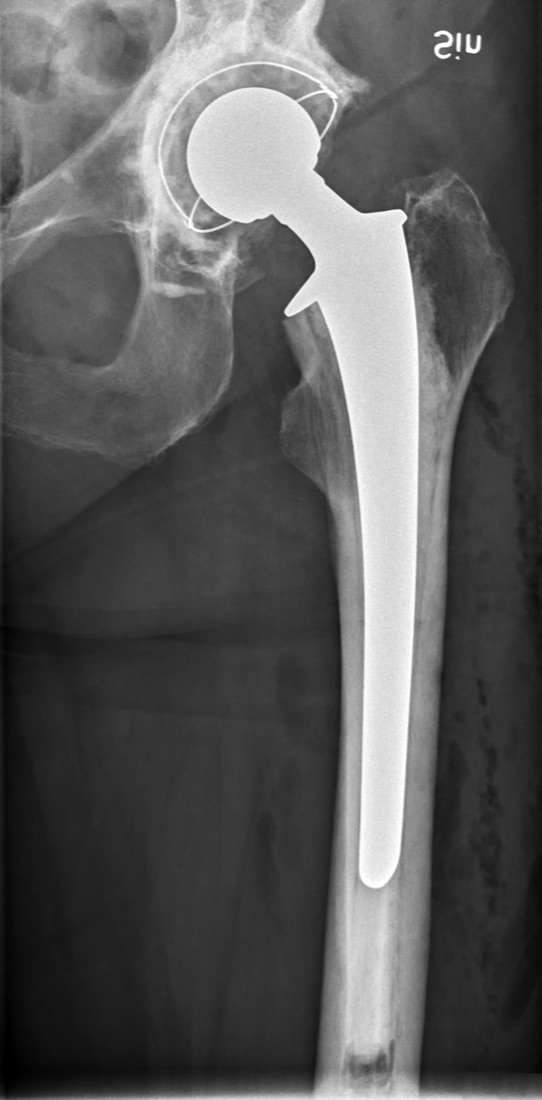
Hip replacement surgery is performed under spinal/epidural or general anaesthesia. The choice of anaesthesia is made together with the anaesthetist, taking the patient's comorbidities into account. Radiographs and, where required, CT or MRI are reviewed for preoperative planning; some centres use computer-assisted planning and patient-specific surgical guides.
General Information About the Operation
Prophylactic antibiotics are given before surgery to prevent infection; a plan for anticoagulation and compression stockings is agreed for thromboprophylaxis (DVT prevention).
- Duration: approximately 1–2 hours for a total hip replacement; 45–90 minutes for hemiarthroplasty
- Anaesthesia: spinal/epidural or general
- Hospital stay: 1–3 days
Surgical Approaches
There are several approaches to the hip joint; the choice depends on the surgeon's experience, the patient's anatomy and any associated pathology. Each approach has advantages and disadvantages; results are broadly similar.
- Posterior approach: one of the most widely used techniques; the capsule is reached by dividing the short external rotators of the hip
- Anterior approach: the joint is reached through intervals between muscles without cutting them; some published series report an early recovery advantage
- Anterolateral approach: a technique between the anterior and lateral approaches
- Lateral approach: the joint is reached by dividing the anterior part of the gluteus medius
Total Hip Replacement (THA) — Surgical Technique
- The patient is positioned in the lateral decubitus or supine position; the incision is made according to the chosen approach
- The skin, subcutaneous tissue and fascia are divided to reach the hip joint; the capsule is opened
- The damaged femoral head is cut and removed
- The acetabulum (socket) is prepared; damaged cartilage and bone are removed with special reamers
- The acetabular component (a metal shell plus a polyethylene, ceramic or metal liner) is inserted; this may be cemented or uncemented
- The femoral canal is prepared and the femoral stem is inserted; cemented and uncemented options are available
- A femoral head (metal or ceramic) is fitted onto the stem; the correct size and range of motion are checked with trial components
- The prosthesis is tested by taking the joint through provocative movements; stability, range of motion and leg length are checked
- The capsule, fascia, subcutaneous tissue and skin are closed in layers
Partial Hip Replacement (Hemiarthroplasty) — Surgical Technique
- The patient is positioned in the lateral decubitus or supine position; the incision is made according to the chosen approach
- The skin, subcutaneous tissue and fascia are divided to reach the hip joint; the capsule is opened
- The fractured or damaged femoral head is removed
- The acetabular cartilage is left untouched and preserved
- The femoral canal is prepared and the femoral stem is inserted; this may be cemented or uncemented (a cemented stem is often preferred in older patients)
- An artificial femoral head is fitted onto the stem; the choice is made between a unipolar (single-piece, fixed) and a bipolar (dual-articulation) design
- The artificial head is seated within the patient's own acetabulum; range of motion and stability are tested
- The capsule, fascia, subcutaneous tissue and skin are closed in layers
Prosthesis Types and Options
- Femoral component — cemented stem: preferred in older patients with poor bone quality; provides immediate stability
- Femoral component — uncemented stem: bone grows onto the surface of the stem to hold it; preferred in younger, more active patients
- Femoral component — short stem: less bone loss and easier revision
- Acetabular component (THA) — metal (titanium) shell plus polyethylene liner: the most widely used combination
- Acetabular component — ceramic liner: very low wear; may be preferred in young, active patients
- Acetabular component — metal-on-metal: use is limited today
- Femoral head — metal (cobalt-chrome) head: the classic option; ceramic head: lower wear, preferred in younger patients
- Hemiarthroplasty — unipolar (single-piece) or bipolar (with an additional articulation within the head; theoretically reduces acetabular wear)
Discharge Information
Patients are usually discharged on the same day (as a day case in appropriately selected patients) or after a hospital stay of 1–3 days. On the day of surgery or the following day the patient is stood up for the first time with the physiotherapist and begins walking with a frame or crutches. Mobilisation follows the weight-bearing protocol set by the surgeon (usually full weight bearing with a cemented prosthesis and partial weight bearing with an uncemented one).
Before discharge the physiotherapist teaches the correct technique for getting out of bed, using a frame or stick, going up and down stairs and daily transfers. After a posterior approach, hip precautions are taught to reduce the risk of dislocation: for the first 6 weeks do not bend the hip beyond 90°, do not cross the legs, and do not turn the operated leg inwards past the midline.
Ice is recommended for 15–20 minutes three to four times a day after discharge. Analgesics, muscle relaxants, gastric protection and anticoagulation for thromboprophylaxis (4–6 weeks) are prescribed. Compression stockings are worn on the operated leg for 3–4 weeks and on the other leg for 1–2 weeks. Sutures are removed on day 10–14.
Early Postoperative Period (First 3 Weeks)
The aims during this period are wound healing, pain control, preserving hip range of motion, maintaining muscle strength and continuing thromboprophylaxis. Weekly review is recommended.
- Wound monitoring: discharge, marked redness, increased warmth or wound edge separation are monitored as signs of infection
- Walking and transfers: a frame in the first weeks, then crutches or a stick. Full weight bearing is generally permitted with a cemented prosthesis and partial weight bearing with an uncemented one
- Hip precautions: with a posterior approach, for the first 6 weeks do not bend the hip beyond 90°, cross the legs or turn the operated leg inwards. Restrictions are fewer with an anterior approach
- Pain: ice, prescribed medication and an appropriate resting position (lying on your back with a pillow between the legs) control the pain
- Thromboprophylaxis: anticoagulation (3–4 weeks), compression stockings, ankle pumping exercises and early mobilisation
- Exercise: ankle pumping, quadriceps isometric, gluteal isometric and straight leg raise exercises four to five times a day
Follow-up
- Days 10–14: suture removal
- Week 6: radiographic review and progression of activity
- Month 3 and month 6 reviews
- Annual follow-up thereafter
Risks & Complications
Total hip replacement (THR) and partial hip replacement (hemiarthroplasty) are among the most successful procedures in modern orthopaedic surgery, and the rate of serious complications is low. Nevertheless, like any operation they carry certain risks, and it is important that you understand the possible complications.
Risks Common to Both Prostheses — Common (Under 5%)
- Superficial wound infection (usually treated with antibiotics)
- Postoperative pain, swelling and temporary bruising
- Bleeding during surgery; a blood transfusion may occasionally be required
- Temporary restriction of movement or stiffness — this resolves with physiotherapy
- Transient symptoms related to anaesthesia such as nausea, dizziness and urinary retention
- Leg length discrepancy (usually small and able to be compensated for)
Risks Common to Both Prostheses — Less Common
- Deep vein thrombosis (DVT) and pulmonary embolism (PE): among the most important risks of lower limb surgery; largely prevented by anticoagulation, compression stockings and early mobilisation
- Deep infection (periprosthetic infection): 1–2%; requires revision and prolonged antibiotics
- Nerve injury (particularly the sciatic or femoral nerve; numbness in the lateral femoral cutaneous nerve territory is more common with an anterior approach)
- Vascular injury (very rare)
- Periprosthetic fracture: a fracture of the femur or acetabulum during or after surgery
- Heterotopic ossification (bone formation in soft tissue)
- Serious anaesthetic complications (very rare)
Risks Specific to Total Hip Replacement (THR)
- Dislocation: 1–5%; the risk is highest in the first 6 weeks and slightly greater with a posterior approach. It can be triggered by prohibited movements such as bending the hip beyond 90° or crossing the legs. An abduction pillow between the legs is used to prevent this
- Wear: the polyethylene liner may wear over the years; advanced wear can lead to osteolysis (bone loss) and loosening, although this is a late risk developing over many years
- Loosening of the acetabular component: may be seen over the years
- Loosening of the femoral stem
- Repeat procedures related to dislocation
Risks Specific to Partial Hip Replacement (Hemiarthroplasty)
- Acetabular erosion (wear): because the artificial head moves within the patient's own acetabular cartilage, the cartilage and bone may wear over time and pain returns; revision to a total hip replacement is then required
- Long-term functional results are more limited than after total hip replacement, so it is not the first choice in active patients
- Dislocation: may occur at a rate similar to that of THR
- In older patients operated on for a fracture, the risk of medical complications (pneumonia, urinary tract infection, cardiac events, delirium) is high
Factors that Increase Risk
- Smoking (increases the risk of wound healing problems and infection)
- Poorly controlled diabetes
- Immunosuppressive therapy and rheumatological disease
- Previous hip surgery and revision cases
- Advanced age, osteoporosis, obesity
- Active or recently treated infection (dental, urinary, skin)
- Significant coexisting cardiac, respiratory or renal disease
Contact Your Doctor Immediately If You Have
- Sudden increase in pain or swelling
- Fever above 38 °C
- Discharge, malodour or separation of the wound
- Firm, one-sided swelling, redness or increased warmth of the leg (suspected DVT)
- Shortness of breath or chest pain (suspected pulmonary embolism)
- Numbness, tingling or loss of strength in the leg
- Sudden deformity of the hip, a feeling of dislocation, or sudden shortening or external rotation of the operated leg
Long-term Outcomes and Survival
Modern total hip replacements have 10–15 year survival rates of 85–95%; some series report survival above 80% at 20 years.
Hemiarthroplasty often lasts the patient's lifetime in older patients with a fracture; however, in active or younger patients acetabular wear may bring revision to a total hip replacement into consideration within an average of 5–10 years. Correct patient selection, modern prosthesis designs, experienced surgery and compliant rehabilitation are the fundamental determinants of success.
Rehabilitation
Recovery after hip replacement requires patience and discipline. The aims of rehabilitation are to control pain, restore range of motion, strengthen the surrounding muscles (particularly the gluteals, quadriceps and core stabilisers) and return the hip to daily life and appropriate activity. The rehabilitation protocols for total and partial hip replacement are broadly similar.
Rehabilitation After Total Hip Replacement (THR)
- Week 0–1: Standing on the first postoperative day; short-distance walking with a frame. Ice, elevation and pain control. Ankle pumping, quadriceps and gluteal isometric exercises. Hip precautions are applied strictly with a posterior approach.
- Weeks 1–3: Walking distance with the frame is increased progressively. Light strengthening exercises; practice lying flat for long periods without a pillow under the knee. Graduated return to activities around the house.
- Weeks 3–6: Progression from the frame to crutches and then to a stick. Higher-resistance strengthening; stair practice. Hip precautions continue (particularly with a posterior approach).
- Weeks 6–12: Most patients discard the stick and walk unaided. Stationary cycling and swimming (once the wound has healed) are recommended. Hip precautions are relaxed gradually.
- Months 3–6: Full return to daily activities. Return to walking, light exercise and light recreational sport (golf, swimming, cycling) with the surgeon's approval.
- Months 6–12: Complete functional recovery; most patients begin to use the prosthesis like their own hip. High-impact and contact sports are avoided.
Rehabilitation After Partial Hip Replacement (Hemiarthroplasty)
- Week 0–1: Early mobilisation is important; getting out of bed and short-distance walking begin within the first 24 hours. Transfers and walking with a frame. Ice and pain control. Ankle pumping and gluteal/quadriceps isometric exercises. Full weight bearing is generally permitted with a cemented prosthesis.
- Weeks 1–3: Mobilisation around the house with a frame; support from a home physiotherapist where required. Daily activity exercises (sitting down and standing up; putting on shoes and socks with assistive devices). Hip precautions are applied according to the surgical approach.
- Weeks 3–6: Walking distance increases; progression to a stick or a single crutch. Strengthening exercises. Fall prevention strategies are particularly important.
- Weeks 6–12: Walking unaided or with a stick; return to daily activities. Because this group generally comprises older patients with a fracture, the rate of recovery varies from person to person.
- Months 3–6: Individualised complete recovery. Regular low-impact activity and muscle strengthening are recommended; the fall prevention programme is continued.
Criteria for Return to Sport and Activity
- Strength in the operated hip reaching at least 75–80% of the other hip
- Pain-free active range of motion
- Ability to walk without a walking aid
- Pain-free completion of sport-specific movements
- No swelling or pain after activity
- Approval of the surgeon and physiotherapist
Recommended Activities
- Walking, light exercise, stationary or outdoor cycling, elliptical trainer
- Swimming (once the wound has healed; swimming pools are not recommended for the first 4–6 weeks)
- Golf (with the surgeon's permission, usually at months 3–6)
- Light strengthening exercise
- Gardening and housework (excluding heavy lifting)
Activities Not Recommended or Requiring Caution
- Heavy lifting (particularly from a squat)
- High-impact activities such as jumping
- Tennis (particularly a hard serve), basketball, volleyball
- Contact sport (football, handball, etc.)
- Skiing (particularly at an advanced level)
Lifestyle Advice
- Perform your home exercise programme every day — it is the single most important determinant of long-term outcome
- Do not smoke (because of the risk of wound healing problems and infection)
- Maintain blood glucose control (for patients with diabetes)
- Healthy weight: every excess kilogram places additional load on the hip prosthesis
- Hip precautions for the first 6 weeks with a posterior approach: do not bend the hip beyond 90°, do not cross the legs, and do not turn the operated leg inwards past the midline
- Fall prevention: remove hazards such as rugs and cables at home; use a night light and grab rails in the bathroom
- Treat dental, urinary and skin infections; consult your doctor before dental or surgical procedures (prophylactic antibiotics may be required)
- Attend your regular follow-up appointments (week 6, month 3, month 6, then annually)
Expected Outcomes
Most patients return to pain-free daily activity 6–8 weeks after a total hip replacement; complete functional recovery takes 3–6 months.
Because hemiarthroplasty patients are generally older people operated on for a fracture, improvement in early mobilisation and transfers is usually marked in the first weeks; the time to complete recovery depends on the patient's general condition and their level of function before the fall. Patient satisfaction is high with both prostheses; avoiding excessive strain and high-impact activity is important in prolonging the life of the prosthesis.
Is This Treatment Right for You?
Every patient's condition is different. After a detailed examination and imaging, the treatment plan that suits you best will be prepared.
Would you like more information about Hip Arthroplasty?
Book Appointment