Shoulder Arthroplasty
Anatomic total and reverse shoulder arthroplasty
Overview
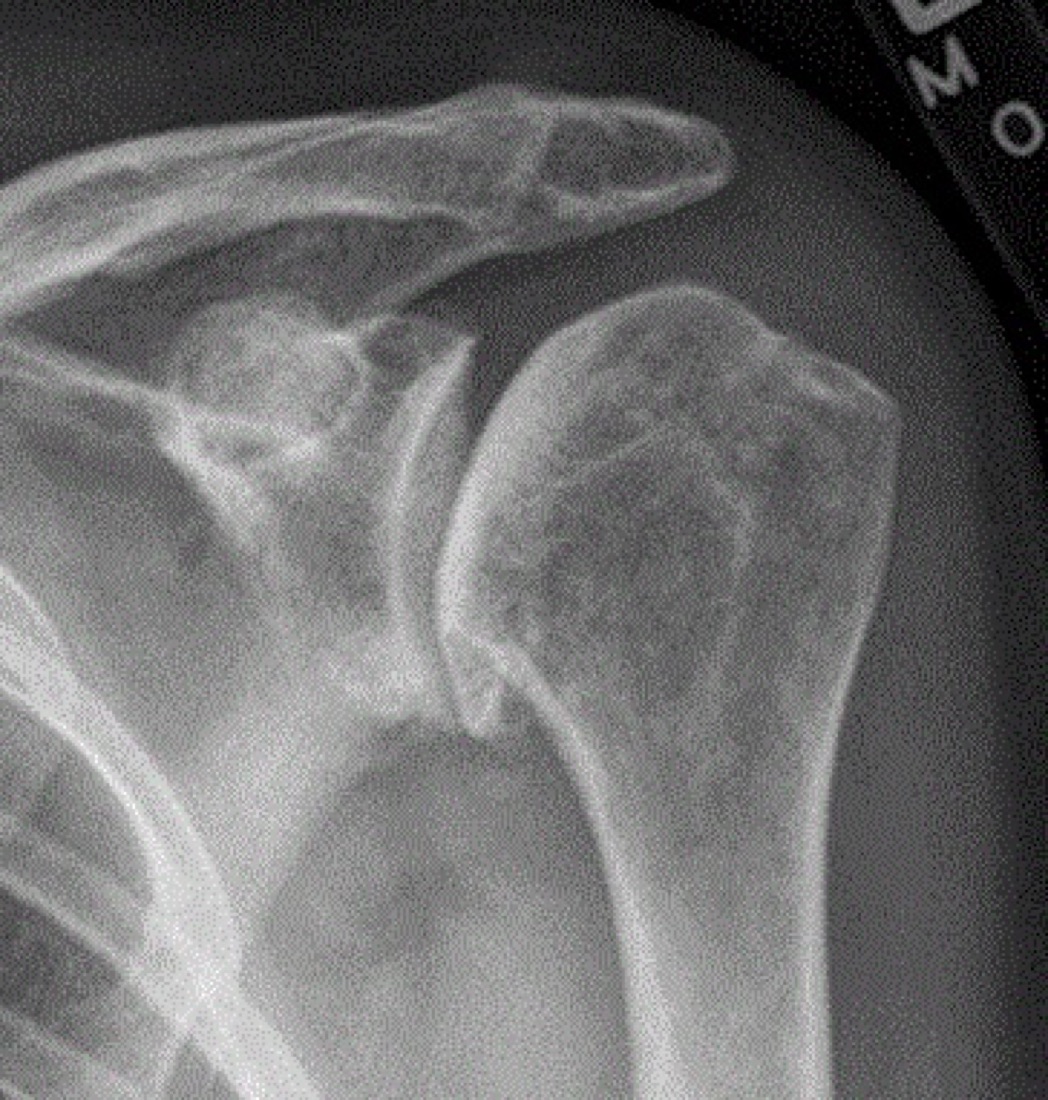
Shoulder replacement (shoulder arthroplasty) is an operation in which severely damaged cartilage — and, where required, the humeral head and glenoid — are replaced with artificial components. The aims are to relieve pain permanently and to improve shoulder function as far as possible. The two most commonly used types are anatomical total shoulder arthroplasty (TSA) and reverse shoulder arthroplasty (RSA).
Anatomy of the Shoulder
The shoulder is a ball-and-socket joint formed by the head of the upper arm bone (humeral head) sitting in a shallow socket on the shoulder blade (the glenoid). The joint surfaces are covered with articular cartilage. The joint is stabilised by the capsule, the glenohumeral ligaments and the labrum (the fibrocartilaginous ring around the socket).
Most of the movement is generated by the rotator cuff (supraspinatus, infraspinatus, teres minor and subscapularis) working together with the deltoid muscle.
Anatomical Total Shoulder Arthroplasty (TSA)
In TSA a metal ball replaces the humeral head and a polyethylene (high-density plastic) socket replaces the glenoid, reproducing the natural anatomy of the shoulder. Because most of the movement is generated by an intact, functioning rotator cuff, TSA requires the rotator cuff to be intact and functional in order to give a good result.
- Typical candidates: glenohumeral osteoarthritis, avascular necrosis, and advanced joint damage with an intact rotator cuff
- Advantages: preserves anatomical biomechanics, offers a greater potential range of motion, and provides long-lasting pain relief and durability
- Disadvantages: if the rotator cuff is insufficient or tears over time, the prosthesis may migrate superiorly and pain may develop
Reverse Shoulder Arthroplasty (RSA)
In RSA the anatomy is reversed: a metal ball (glenosphere) is placed on the glenoid side and a polyethylene socket on the humeral side. This mechanical change moves the centre of rotation of the shoulder medially and inferiorly, increasing the efficiency of the deltoid muscle and allowing the arm to be raised even when the rotator cuff is weak or absent.
- Typical candidates: rotator cuff arthropathy (arthritis secondary to cuff tearing), massive irreparable rotator cuff tears, failed previous shoulder replacement (revision), complex proximal humerus fractures (particularly in older patients) and inflammatory arthritis
- Advantages: excellent pain control; active elevation of the arm without a rotator cuff; high patient satisfaction
- Disadvantages: range of motion (particularly internal and external rotation) is more limited than after TSA, and there are complications specific to RSA such as scapular notching, dislocation and acromial fracture
Which Patient, Which Prosthesis?
The decision is individualised according to the patient's age, activity level, shoulder pathology, rotator cuff status, bone quality and comorbidities.
- Intact rotator cuff + glenohumeral arthritis → TSA
- Rotator cuff arthropathy or massive irreparable cuff tear → RSA
- Complex proximal humerus fracture in an older patient → RSA
- Severe glenoid bone loss → RSA is generally safer
- Shoulder arthritis in a young, active patient → TSA is preferred, although the indications for RSA have broadened in recent years
- Failed previous TSA → RSA is frequently used at revision
Symptoms and Indications
- Persistent shoulder pain: pain at rest and particularly worse at night
- Loss of movement: difficulty raising the arm, reaching overhead and combing the hair
- Stiffness: marked restriction, particularly of external rotation and abduction
- Crepitus: a grating sensation and sound with movement
- Loss of strength: inability to raise or pull with the arm
- Failure of non-operative treatment: persistent symptoms despite medication, physiotherapy and injections
Diagnosis
Diagnosis is based on a detailed history, physical examination and imaging. The patient's age, daily activities, duration of pain, previous operations and comorbidities (diabetes, rheumatological disease, smoking) are reviewed. Examination assesses active and passive range of motion, rotator cuff strength (Jobe, lift-off and external rotation strength tests), joint line tenderness and neurovascular status.
Plain radiographs show joint space narrowing, osteophytes, calcific deposits and superior migration of the humeral head; they are the first and decisive investigation. CT is required for surgical planning to assess glenoid bone loss, glenoid version and subluxation; three-dimensional CT now allows patient-specific surgical planning. MRI assesses the rotator cuff muscles, fatty infiltration and the labrum and cartilage, and provides information that is critical to the choice between TSA and RSA.
Before Deciding on Surgery
Shoulder replacement is major surgery and is not reversible. Non-operative treatments should be tried before the decision is made:
- Activity modification and avoiding lifting weights
- Analgesics / NSAIDs (under medical supervision)
- Physiotherapy: range of motion, stretching and balanced strengthening
- Intra-articular injections (corticosteroid, hyaluronic acid)
- Stopping smoking (this significantly affects surgical success)
- Weight control and blood glucose control (in patients with diabetes)
Expected Outcomes
With appropriate patient selection, shoulder replacement is a highly successful operation for relieving pain and improving function. After TSA the great majority of patients are largely free of pain and can use the shoulder comfortably in daily life; most can comb their hair, wash and reach overhead without pain.
After RSA, pain control and patient satisfaction are high; patients can usually raise the arm above shoulder height and reach the top of the head or a cupboard. Both prostheses are expected to be long lasting; modern prosthetic systems have 10–15 year survival rates of 85–95%.
Surgery & First 3 Weeks
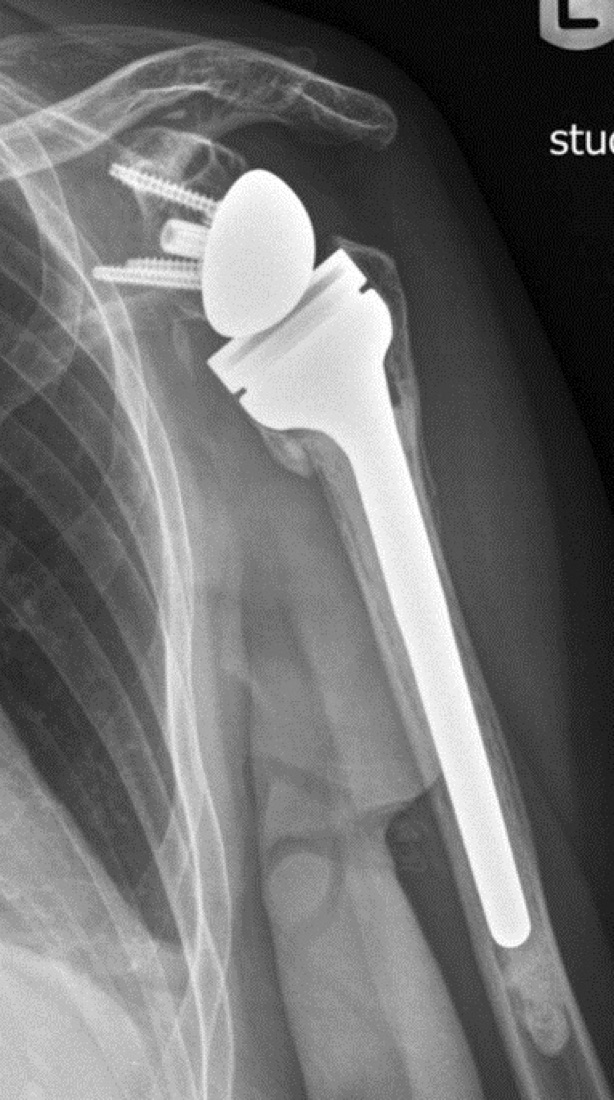
Shoulder replacement is performed under general anaesthesia, frequently combined with an interscalene block, with the patient in the semi-seated (beach-chair) or lateral decubitus position. The interscalene block is used to control pain in the first 24–48 hours and may be extended by a further day through a catheter where required. Glenoid preparation is planned preoperatively from CT and radiographs; some centres use computer-assisted planning and patient-specific surgical guides.
General Information About the Operation
- Duration: approximately 1.5–2 hours for TSA; 1–2 hours for RSA (longer for revisions)
- Anaesthesia: general anaesthesia plus interscalene block (the most commonly preferred combination)
- Incision: 10–12 cm on average at the front of the shoulder (deltopectoral approach); some RSAs may use an anterosuperior approach
- Hospital stay: 2 days
Anatomical Total Shoulder Arthroplasty (TSA) — Surgical Technique
- The patient is positioned in the beach-chair position and the deltopectoral interval is entered
- The subscapularis tendon is released in a controlled manner (peel or tenotomy); anatomical repair at the end of the procedure is important
- The glenohumeral joint is opened and the humeral head is removed with specialised saws at the anatomical angle
- The glenoid surface is prepared; any bone defect is filled with graft if required
- The polyethylene glenoid component is implanted; cement may be used depending on the patient's bone quality
- A stem is inserted into the humerus; cemented, uncemented and stemless options are available
- An anatomical metal head is fitted onto the stem; trial components are used to check size and range of motion
- The prosthesis is tested through a full arc of movement; stability, range of motion and limb length are checked
- The subscapularis tendon is securely repaired; the deltoid muscle is not disturbed. The incision is closed
Reverse Shoulder Arthroplasty (RSA) — Surgical Technique
- The patient is positioned in the beach-chair position and the deltopectoral interval is entered
- The subscapularis is released; if tendon quality is inadequate it may not be repaired
- The humeral head is excised
- The glenoid is prepared and the baseplate is fixed to the glenoid bone with screws
- The glenosphere (metal ball) is placed onto the baseplate
- A stem is inserted into the humeral canal; this may be cemented or uncemented
- A humeral tray and polyethylene insert are fitted onto the stem
- The joint is reduced and stability and range of motion (particularly abduction and flexion) are tested
- The subscapularis is repaired where possible; some RSA designs do not require repair. The incision is closed
Prosthesis Types and Options
- Humeral component — Standard (long) stem: the traditional option, providing wide bone contact
- Humeral component — Short stem: less bone loss and easier revision
- Humeral component — Stemless: a stemless design that preserves the humeral canal (where bone quality permits)
- Humeral component — Cemented / uncemented: selected according to bone quality and surgeon preference
- Glenoid component (TSA) — All-polyethylene: the most widely used, cemented
- Glenoid component (TSA) — Hybrid (metal-backed plus polyethylene); augmented (stepped) polyethylene to fill a defect in posterior glenoid bone loss
- Glenosphere and baseplate (RSA) — Standard 36–40 mm glenosphere; lateralised designs to reduce scapular notching
- Glenosphere and baseplate (RSA) — Screw-fixed baseplate; bone graft (BIO-RSA) may be added where there is bone loss
- Convertible systems: allow conversion from TSA to RSA without changing the humeral stem — easing revision
- Patient-specific surgical guides: CT-based three-dimensional planning for precise glenoid positioning
Early Postoperative Period (First 4–6 Weeks)
On the day of or the day after surgery you are mobilised with the physiotherapist and discharged wearing a sling. You usually go home after two nights. Pain appears once the interscalene block wears off; control is good until the catheter is removed (usually two days), after which it is managed with analgesics.
- Wound monitoring: discharge, marked redness and increased warmth are monitored for signs of infection. It is important not to wet the wound for the first 10–14 days; sutures are removed on day 10–14
- Sling use: a sling is recommended for 4–6 weeks after both TSA and RSA. The period is often shorter after RSA (3–4 weeks) and early passive movement is permitted. After TSA, internal rotation is prohibited for the first 6 weeks in order to protect the subscapularis repair
- Range of motion: elbow, wrist and finger exercises are performed from the first day. Passive pendulum (Codman) exercises begin from week 1. After RSA, passive elevation of the arm can safely begin earlier (at weeks 2–3); after TSA more caution is needed with internal rotation and active use because the subscapularis repair must be protected
- Pain: ice (four times a day for 10–15 minutes), prescribed analgesics and an appropriate resting position (sleeping semi-upright is comforting in the first weeks) are important
- Nerve and vascular monitoring: the axillary nerve is the nerve most commonly affected in shoulder surgery. Report any loss of sensation over the outer upper arm or weakness of the deltoid
- Thromboprophylaxis: the risk is lower than in lower limb surgery, but standing and walking are encouraged from the first day to avoid immobility. Anticoagulation may be given to high-risk patients
Risks & Complications
Anatomical total shoulder arthroplasty (TSA) and reverse shoulder arthroplasty (RSA) are safe and effective procedures in modern shoulder surgery. Patient satisfaction is high and the rate of serious complications is low. Nevertheless, like any operation they carry specific risks.
Risks Common to Both Prostheses — Common (Under 5%)
- Superficial wound infection (usually treated with antibiotics)
- Postoperative pain, swelling and temporary bruising
- Temporary restriction of movement or stiffness — resolves with regular physiotherapy
- Transient symptoms related to anaesthesia such as nausea and dizziness
- Temporary altered sensation after an interscalene block
Risks Common to Both Prostheses — Less Common
- Deep infection (periprosthetic infection): 0.5–2%; frequently requires revision and prolonged antibiotics; the most common organism is Cutibacterium acnes
- Nerve injury (particularly the axillary or musculocutaneous nerve; very rare, <1%)
- Periprosthetic fracture: a fracture of the humerus or glenoid during or after surgery
- Loosening of the components: may occur over the years, particularly on the glenoid side
- Wear: wear of the polyethylene socket over the years
- Heterotopic ossification (bone formation in soft tissue)
- Deep vein thrombosis / pulmonary embolism (very rare in the upper limb)
- Serious anaesthetic complications (very rare)
Risks Specific to Anatomical Total Shoulder Arthroplasty (TSA)
- Subscapularis insufficiency: failure of the tendon released during surgery to heal, causing loss of internal rotation strength and shoulder instability
- Rotator cuff insufficiency or tearing over time: superior migration of the humeral head, with pain and loss of function
- Loosening of the glenoid component (the most common cause of failure)
- Posterior subluxation / instability (particularly if glenoid retroversion has not been adequately corrected)
- More frequent need for revision to RSA: if the rotator cuff becomes insufficient
Risks Specific to Reverse Shoulder Arthroplasty (RSA)
- Scapular notching: erosion of bone where the glenosphere contacts the scapular neck; reduced by lateralised designs
- Dislocation: 2–5%; particularly in the early period with extreme rotation and movements taking the arm behind the body
- Acromial or scapular spine fracture (stress fracture): 1–2%; related to the increased tension on the deltoid
- Restriction of external and internal rotation (reaching into a pocket, reaching behind the back); this usually resolves with physiotherapy and rehabilitation
- Baseplate loosening (in the long term, on the glenoid side)
Factors that Increase Risk
- Smoking (increases the risk of wound healing problems and infection)
- Poorly controlled diabetes
- Immunosuppressive therapy and rheumatological disease
- Previous shoulder surgery and revision cases
- Advanced age and osteoporosis; obesity
- Active or recently treated infection (dental, urinary, skin)
Contact Your Doctor Immediately If You Have
- Sudden increase in pain or swelling
- Fever above 38 °C
- Discharge, malodour or separation of the wound
- Numbness, tingling or loss of strength in the arm or hand
- Sudden deformity of the shoulder, a feeling of dislocation or excessive mobility
- Firm, one-sided swelling or redness of the leg, or shortness of breath
- Chest pain
Long-term Outcomes and Survival
Modern shoulder prostheses have 10-year survival rates of 85–95% — that is, the likelihood that the prosthesis is still functioning without needing revision at 10 years.
Because RSA has a shorter history than TSA, very long-term (15+ year) data are limited; however, 10-year survival rates are comparable with TSA. Appropriate patient selection, modern prosthetic designs, experienced surgery and compliant rehabilitation are the fundamental determinants of success.
Rehabilitation
Recovery after shoulder replacement requires patience and discipline. The aims of rehabilitation are to control pain, progressively regain range of motion, strengthen the surrounding muscles and return the shoulder to daily life and appropriate activity. The protocols for TSA and RSA differ: after TSA the priority is protecting the subscapularis repair, whereas after RSA the priorities are making the deltoid function effectively and maintaining the stability of the prosthesis.
Anatomical Total Shoulder Arthroplasty (TSA) Rehabilitation
- Weeks 0–4: Sling full time. Ice, elevation and pain control. Passive pendulum (Codman) exercises. Elbow, wrist and finger range-of-motion exercises. Scapular isometric exercises. Active internal rotation and resisted strengthening are prohibited in order to protect the subscapularis repair.
- Weeks 4–6: Passive and active-assisted range-of-motion work. Flexion is increased progressively to 0–140°, external rotation from neutral to 30–40° and abduction to 90°. The sling is discontinued gradually. Internal rotation remains restricted.
- Weeks 6–12: Full active range of motion is the target. Light rotator cuff and scapular stabilisation strengthening (resistance band). Internal rotation begins gradually. Swimming (progressively) and stationary cycling are recommended. Weight lifting is prohibited.
- Months 3–6: Higher-resistance strengthening. Full return to daily activities. Return to light recreational sport (golf, swimming) with the surgeon's approval.
- Months 6–12: Return to light and moderate sport (single-handed tennis, golf, walking, swimming) and to all daily activities. Heavy lifting and high-impact activity are avoided.
Reverse Shoulder Arthroplasty (RSA) Rehabilitation
- Weeks 0–3: Sling full time. Ice and pain control. Elbow, wrist and finger range-of-motion exercises. Gentle passive pendulum exercises (with the surgeon's approval). Active use of the arm is prohibited.
- Weeks 3–6: Passive range-of-motion work begins; flexion to 0–120° and abduction to 90° (within the limits specified by the surgeon). External rotation is restricted; taking the arm behind the body in internal rotation is prohibited in the early weeks because of the risk of dislocation.
- Weeks 6–12: Active-assisted and active movement begin. The sling is discontinued gradually. Light deltoid and scapular strengthening. Progressive use of the arm in daily activities.
Is This Treatment Right for You?
Every patient's condition is different. After a detailed examination and imaging, the treatment plan that suits you best will be prepared.
Would you like more information about Shoulder Arthroplasty?
Book Appointment