Bankart Repair
Arthroscopic repair of the labrum following anterior shoulder dislocation
Overview
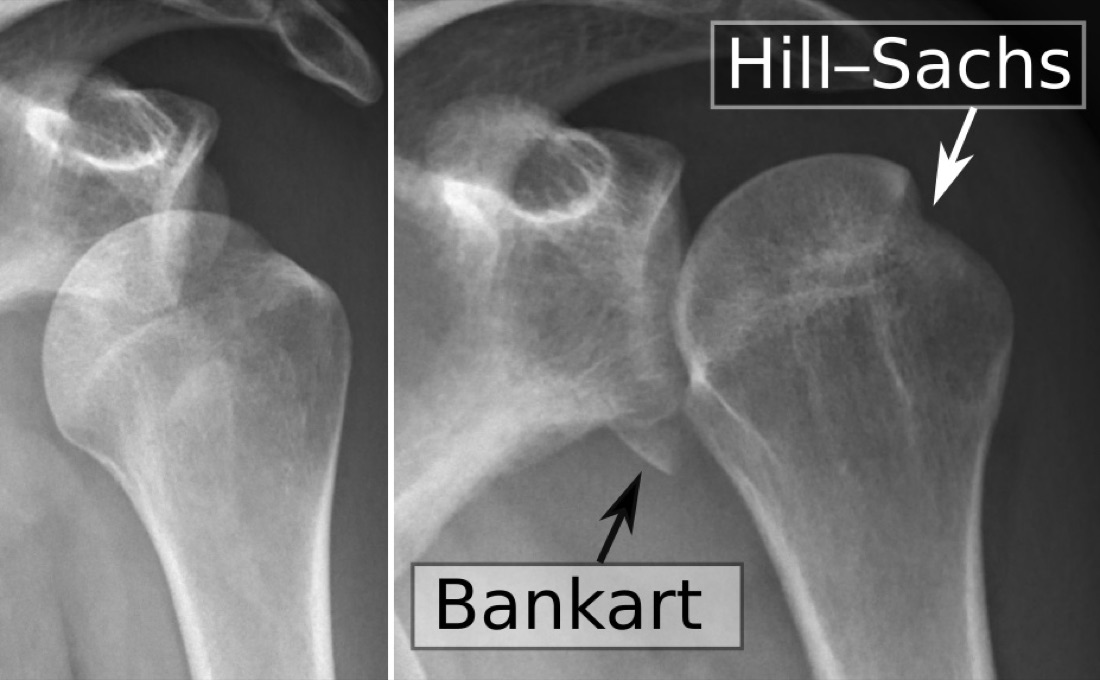
A Bankart lesion is a detachment of the anteroinferior portion of the labrum — the fibrocartilaginous ring that surrounds the rim of the glenoid (the socket on the shoulder blade) and stabilises the shoulder joint. It usually develops after an anterior shoulder dislocation and is the most common structural cause of shoulder instability. Posterior dislocations are less common; in those cases a posterior Bankart lesion is seen.
Function of the Shoulder and the Labrum
- Joint stability: the shoulder is a ball-and-socket joint. Because the socket (glenoid) is shallow, most of the stability is provided by the labrum and the capsuloligamentous complex.
- Deepening the socket: the labrum increases the depth of the glenoid by approximately 50%, helping to keep the humeral head in place.
- Ligament attachment: the glenohumeral ligaments (particularly the inferior glenohumeral ligament) attach to the labrum, so a labral tear also impairs the function of the ligament complex.
- Proprioception: receptors in the labrum and capsule provide a sense of shoulder position; after a tear this sense is disturbed and a feeling that "my shoulder is going to come out" develops.
- Healing potential: the labrum is only partially vascularised; the success of repair depends on the location and pattern of the tear and on any associated bone loss.
Classification by Bone Loss
- Classic (soft-tissue) Bankart: no bone loss; high repair success rate
- Bony Bankart: a bone fragment at the glenoid rim; repair is appropriate when bone loss is under 20%
- Extensive bone loss (>20%): Bankart repair alone may be insufficient; a bone block procedure (Latarjet) may be required
Soft-tissue Bankart or Tears with Limited Bone Loss
These lesions can heal by reattaching the labrum to the glenoid rim with anchors and sutures, preserving healthy tissue.
Types of Tear
- Classic Bankart: a soft-tissue tear; the most common pattern, seen in young patients after an acute dislocation
- Posterior Bankart: usually seen in patients who have had a seizure (for example following electrocution or epilepsy) and in professional athletes
- Bony Bankart: a tear including a bone fragment at the glenoid rim; seen with recurrent dislocations
- ALPSA (anterior labroligamentous periosteal sleeve avulsion): the labrum slips inferiorly together with the periosteum and heals in a medialised position
- Perthes lesion: the labrum is detached but the periosteum remains intact; easily missed on MRI
- HAGL (humeral avulsion of the glenohumeral ligaments): the ligament avulses from the humeral side; rare, and requires separate repair
Symptoms and How the Diagnosis is Made
- A sensation that the shoulder is about to come out: particularly when the arm is raised overhead and externally rotated
- Recurrent dislocation or subluxation: the shoulder comes out of joint and relocates either spontaneously or with assistance
- Pain: during sleep or when lying on the affected shoulder, and with overhead activity
- Loss of strength: particularly in external rotation and abduction
- Clicking or popping: a mechanical sensation and sound during movement
- Apprehension: a feeling of the shoulder "giving way" when throwing, serving or reaching overhead
Diagnosis
Examination includes the apprehension, relocation and sulcus tests. Previous dislocations, the mechanism of dislocation and the sense of instability are assessed in detail. Plain radiographs are obtained to evaluate bone loss, a Hill–Sachs lesion and joint architecture. MRI demonstrates the labrum and ligaments; where required, MR arthrography with intra-articular contrast is the gold standard for detecting a labral tear. CT is requested to quantify glenoid bone loss in recurrent dislocation. The definitive decision and treatment plan are made at arthroscopy, with the tear seen directly.
Advantages
The most important advantage is prevention of the glenoid bone loss and shoulder arthritis that can develop from recurrent dislocation over the long term. Without surgery the shoulder dislocates repeatedly and at increasing frequency, additional structures tear and joint damage accumulates.
- Operative time: on average 60–90 minutes; general anaesthesia (which may be combined with an interscalene block)
- Discharge the following day
- Small incisions (1 cm), less pain, lower infection risk and better range of motion
Disadvantages
- You will need to wear a sling for 4–6 weeks. Moving the shoulder excessively during this period may cause the repair to fail in the early phase.
- External rotation (turning the arm outwards) is restricted completely at first and then to a set angle; shoulder stiffness may therefore develop in the first 2–3 months, although this resolves completely with physiotherapy.
- In patients with significant bone loss, Bankart repair alone may be insufficient; additional procedures such as Latarjet or remplissage may be required.
Why Bankart Repair?
The labrum and the glenohumeral ligament complex have critical roles in shoulder stability, proprioception and retention of the humeral head within the socket. Preserving as much healthy labral tissue as possible is therefore of great importance in preventing recurrent dislocation, glenoid bone loss and shoulder arthritis in later years. Studies show that the risk of recurrent dislocation reaches 70–90% in young, active patients who do not undergo surgical repair after a first shoulder dislocation.
Who is a Candidate?
Arthroscopic Bankart repair is performed for tears of the anteroinferior labrum with glenoid bone loss under 20%, in which the labrum can be reattached with anchors and healing can be expected.
- Active athletes who have sustained a first traumatic shoulder dislocation
- Patients with recurrent shoulder dislocation or subluxation
- Those participating in contact or overhead sport (football, basketball, volleyball, wrestling, gymnastics)
- Young patients under 35
- Individuals in whom MRI shows a classic Bankart, ALPSA or Perthes lesion
- Patients whose general health is suitable for general anaesthesia and surgery
Surgery & First 3 Weeks
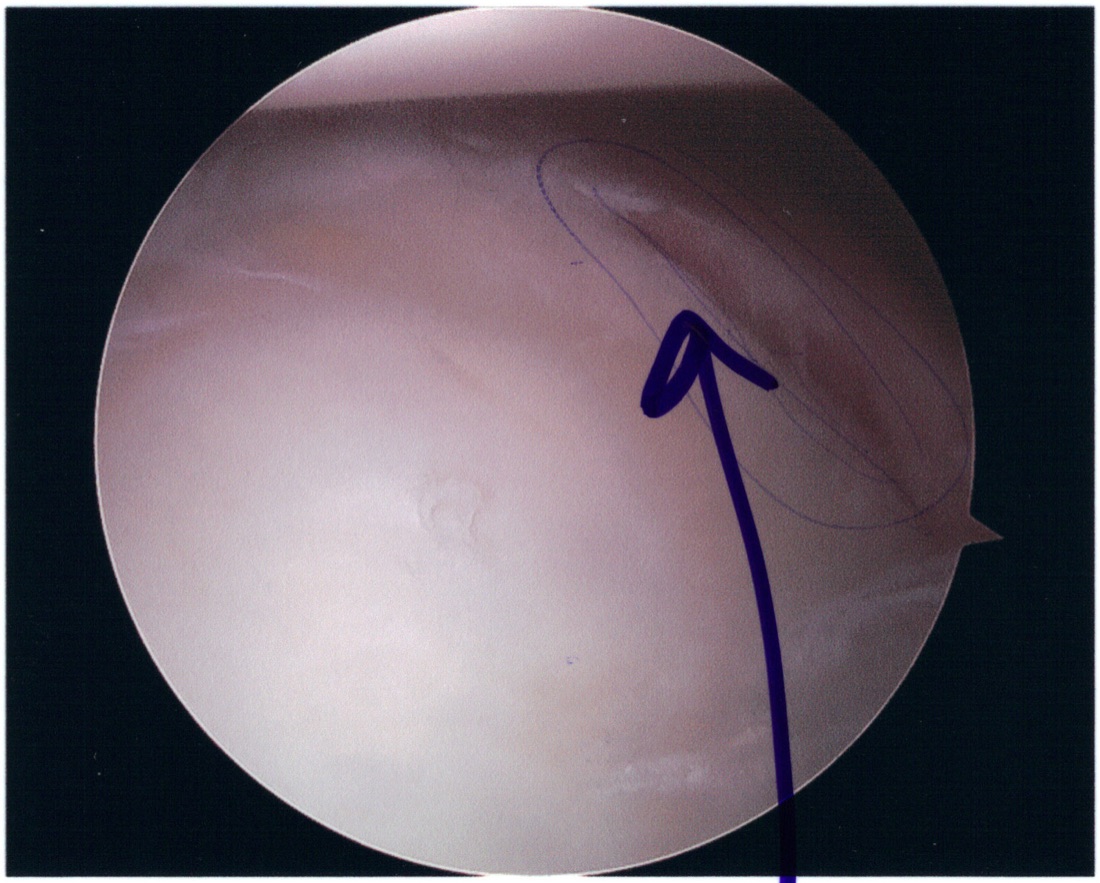
Arthroscopic Bankart repair is a procedure in which the detached labrum and joint capsule are first prepared to promote healing and then reattached to their original anatomical position on the glenoid rim using suture anchors and sutures. The shoulder joint is entered arthroscopically through small incisions (approximately 1 cm); the tear is visualised, its edges are debrided and it is repaired with 2–3 anchors.
General Information About the Operation
- Aim: to preserve as much labral tissue as possible and restore shoulder stability
- Duration: 60–90 minutes; general anaesthesia (in some cases with an interscalene block)
- Discharge: usually the same day or the following day
- Complications: under 5%; most are mild and temporary
Repair Techniques
- Arthroscopic suture anchor repair: the most commonly used technique. The labrum is reattached to the glenoid with absorbable or titanium anchors.
- Knotless anchor technique: a modern method in which the suture is locked within the anchor without tying a knot, reducing intra-articular friction.
- Remplissage: where a Hill–Sachs lesion is present, the capsule and infraspinatus tendon are secured into the defect in the humeral head.
- Latarjet (bone block) procedure: for glenoid bone loss above 20% or after failed previous repair, the coracoid process is transferred to the glenoid through an open approach.
- Open Bankart repair: performed in selected patients who are not suitable for the arthroscopic technique.
Discharge Information
Patients are usually discharged the same day or after one night in hospital. On the first postoperative day you are mobilised with the physiotherapist and a sling is fitted. You must not remove the arm from the sling and use it. The sling is applied in theatre and should be worn for 4–6 weeks; the duration is reduced gradually at the time your surgeon considers appropriate.
On the first day the physiotherapist teaches elbow, wrist and finger range-of-motion exercises together with scapular isometric exercises; it is important to perform these 3–4 times a day.
Ice for 10–15 minutes four times a day is recommended after discharge. Analgesics, muscle relaxants and antibiotic prophylaxis may be prescribed. Dressings should be changed regularly; it is important not to wet the wound for the first 10–14 days.
Return to Activity
Swelling and pain are expected in the first 24–48 hours after surgery. From the first week, pendulum (Codman) and passive range-of-motion exercises are started within a pain-free range. After the sling is discontinued at 4–6 weeks, active range-of-motion and light strengthening exercises intensify.
- Desk-based work: weeks 2–3 (with the sling)
- Work requiring hand and elbow use: 4–6 weeks
- Light strengthening: weeks 6–8
- Graduated return to sport: months 4–6
- Full return to contact and throwing sport: months 6–12
- Physical activity should be maintained long term, keeping the rotator cuff and scapular stabilisers strong
Early Postoperative Period (First 3 Weeks)
On the day after surgery you are mobilised with the physiotherapist wearing the sling and discharged. The operated arm must rest within the sling. Your physiotherapist will show you elbow, wrist and finger range-of-motion exercises together with scapular isometric exercises; these should be performed 4–5 times a day. Weekly review is recommended, at which your exercises are checked, your dressings changed and your medication prescribed.
- Wound monitoring: discharge, marked redness and increased warmth are monitored for signs of infection
- Range of motion: being able to bend and straighten the elbow comfortably within the sling and a steady increase in passive range are important. Active external rotation is prohibited for the first 6 weeks.
- Pain: unless soft-tissue swelling develops around the shoulder, there is usually a marked reduction within 1–2 weeks
- Nerve monitoring: the axillary nerve is at risk during shoulder surgery. Sensation over the outer upper arm and deltoid strength are monitored; this is rare, but if it occurs, EMG assessment and physiotherapy are required.
Risks & Complications
Arthroscopic Bankart repair is generally a safe and effective procedure. It is one of the lower-risk operations in modern shoulder surgery; the rate of serious complications is below 5%.
Common (Under 5%)
- Superficial wound infection (usually treated with antibiotics)
- Postoperative pain and swelling (settles within a few days)
- Temporary joint stiffness — resolves with regular physiotherapy
- Mild loss of strength — regained with rehabilitation
- Slight permanent restriction of external rotation
Less Common
- Recurrent shoulder dislocation / failure of the repair (5–15%; particularly where there is bone loss or in contact athletes)
- Loosening or migration of a suture anchor
- Frozen shoulder (adhesive capsulitis) — prolonged stiffness
- Axillary nerve or surrounding vascular injury (very rare, <1%)
- Deep vein thrombosis (very rare)
- Chondrolysis — dissolution of the joint cartilage (very rare)
Contact Your Doctor Immediately If You Have
- Sudden increase in pain or swelling
- Fever above 38 °C
- Numbness, tingling or loss of strength in the arm or hand
- Discharge or malodour from the wound
- A feeling that the shoulder has come out again, or sudden deformity
- Shortness of breath or chest pain
Rehabilitation
Rehabilitation after Bankart repair aims to restore range of motion, strength and shoulder stability progressively while protecting the healing labrum. The programme is advanced with the surgeon's approval.
Rehabilitation Timeline
- Weeks 0–4: Sling full time. Ice, elevation and pain control. Passive pendulum (Codman) exercises. Elbow, wrist and finger range-of-motion exercises. Scapular isometric exercises. External rotation prohibited.
- Weeks 4–6: Active-assisted range of motion (progressive). Flexion and abduction to 90°, external rotation to neutral. The sling is discontinued gradually.
- Weeks 6–12: Target is full active range of motion. Light rotator cuff and scapular stabilisation strengthening (resistance band). Swimming (not freestyle) and cycling are recommended. Weight lifting is prohibited.
- Months 3–4: Proprioception and dynamic stabilisation training. Higher-resistance strengthening. Introduction of plyometric exercises.
- Months 4–6: Sport-specific drills; throwing mechanics and overhead movements are introduced gradually. Return to low-contact sport.
- Months 6–9: Full return to contact and throwing sport with the surgeon's approval.
Criteria for Return to Sport
- Rotator cuff strength at 90% of the opposite shoulder
- Full, pain-free range of motion (particularly external rotation)
- No apprehension (no feeling that the shoulder will come out)
- Pain-free completion of sport-specific drills
- No swelling or pain after activity
Shoulder Health After Repair
A successful Bankart repair preserves labral tissue and supports long-term shoulder health. The following measures reduce the risk of recurrent dislocation and osteoarthritis:
- Regular rotator cuff and scapular stabilisation exercises
- Correct throwing and serving technique (for athletes)
- Lower-risk sports: swimming (progressive), cycling, running, elliptical trainer
- Avoid high-risk and contact sport (particularly for the first 6–12 months)
- Stopping smoking (it adversely affects soft-tissue healing)
Lifestyle Advice
- Warm up before exercise and stretch afterwards
- Avoid lifting weights overhead for the first 6 months
- Avoid lying on the operated shoulder for the first 3 months
- Avoid sudden movements and positions that place excessive strain on the shoulder
- Attend your follow-up appointments
Is This Treatment Right for You?
Every patient's condition is different. After a detailed examination and imaging, the treatment plan that suits you best will be prepared.
Would you like more information about Bankart Repair?
Book Appointment