Trigger Finger
Injection and surgical treatment of stenosing tenosynovitis causing the finger to catch
Overview
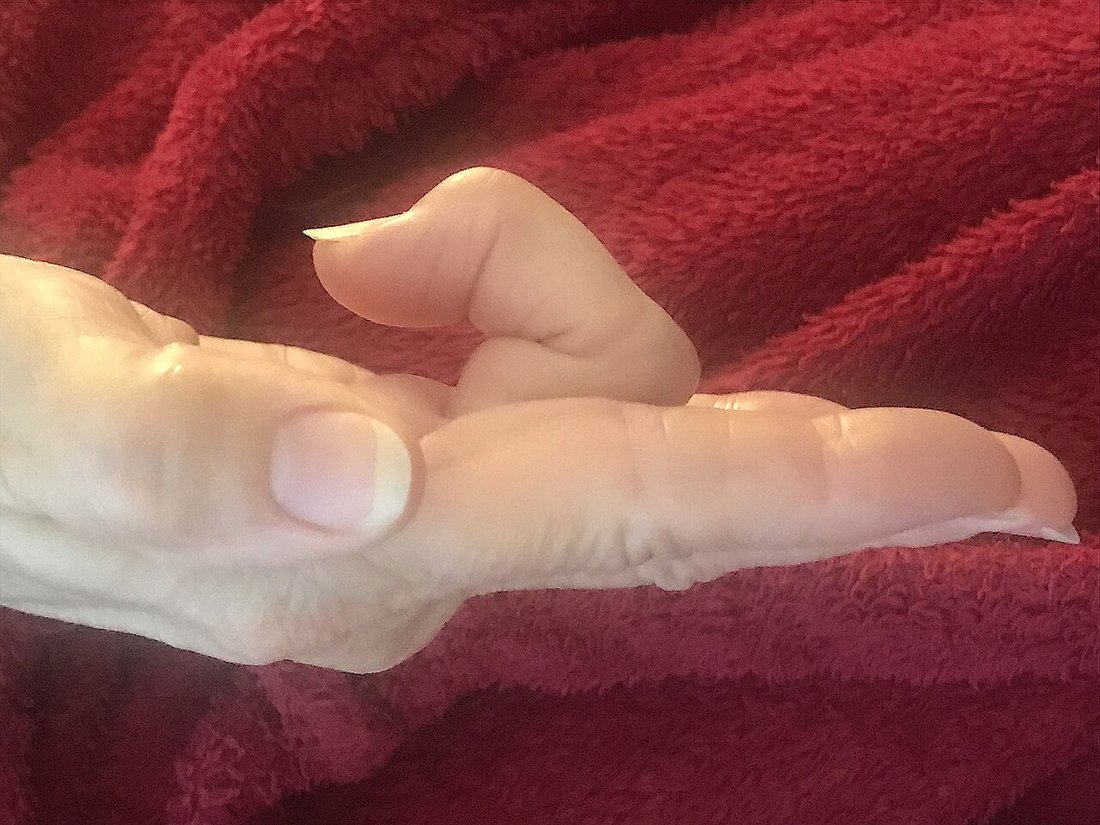
Trigger finger (stenosing tenosynovitis) is catching of a finger flexor tendon at the first pulley (A1) in the palm, so that the finger snaps as it bends and straightens or locks in a bent position. The thumb, ring and middle fingers are most often affected. It is commoner in women and between the ages of 50 and 60, and markedly more frequent in people with diabetes, in whom it also responds less well to treatment. Early disease responds well to injection; once locking is established, a small operation resolves it permanently.
The Flexor Tendon - Pulley System and the Mechanism
The tendons that bend the fingers run from the palm to the fingertip through a series of fibrous rings called pulleys, which hold the tendon close to the bone and stop it bowstringing when the finger flexes.
The A1 pulley, the first of these rings, lies at the base of the finger in the palm and carries the greatest load. Repeated gripping and squeezing cause thickening and inflammation of the tendon sheath at this point.
The thickened tendon passes the narrowed ring with difficulty: it slips past as the finger bends, then catches on the way back and releases with an audible snap. As the process advances, the finger locks in flexion and can only be straightened with the other hand.
Trigger thumb in children is a different condition, usually congenital, recognised by a bent tip joint, and assessed separately.
Risk Factors
- Diabetes: the strongest association, with multiple digits affected and a high recurrence rate
- Female sex and the 50 - 60 age range
- Repetitive forceful gripping: hand tools, scissors, gardening, musical instruments
- Rheumatoid arthritis and gout
- Hypothyroidism, amyloidosis, chronic kidney failure and dialysis
- Other hand conditions: carpal tunnel syndrome, De Quervain's tenosynovitis, Dupuytren's disease
Symptoms and Staging
- Pain and tenderness in the palm at the base of the finger, worse on pressure
- A palpable nodule on the tendon that moves with the finger
- Catching and snapping as the finger bends and straightens
- Morning stiffness: symptoms are worst at night and on waking
- Locking in flexion in advanced disease, needing the other hand to release
- A fixed flexion deformity and joint stiffness in the most advanced stage
- Stage 1: pain and tenderness without triggering. Stage 2: triggering that the patient can overcome. Stage 3: locking requiring passive release. Stage 4: fixed flexion deformity
Making the Diagnosis
The diagnosis is entirely clinical and imaging is usually unnecessary. Tenderness over the A1 pulley, a palpable nodule and demonstrable triggering on examination are sufficient.
The patient is asked to bend and straighten the finger slowly, so that catching and snapping can be observed and the stage determined.
Ultrasound demonstrates sheath thickening and fluid in doubtful cases and guides injection accurately. Radiographs are not routine and are obtained where joint arthritis is suspected.
The differential diagnosis includes finger joint arthritis, Dupuytren's disease, a tendon sheath ganglion and traumatic tendon injury. Blood glucose should be checked where several fingers are involved.
Non-operative Treatment
Non-operative treatment succeeds in early disease. Corticosteroid injection both confirms the diagnosis and is the most effective non-surgical treatment for trigger finger.
- Activity modification: reducing forceful repetitive gripping, using thick-handled tools
- Splinting the base joint of the finger in extension, particularly at night for six weeks, is effective in early disease
- Anti-inflammatory medication controls pain but does not resolve the thickening
- Corticosteroid injection into the tendon sheath relieves symptoms in the great majority of patients; ultrasound guidance improves its effectiveness
- A second injection may be given to patients who responded and then relapsed; a third is generally avoided
- Patients with diabetes should be warned that blood glucose may rise for a few days after injection
- Gentle stretching and gliding exercises, and heat
Surgery & First 3 Weeks
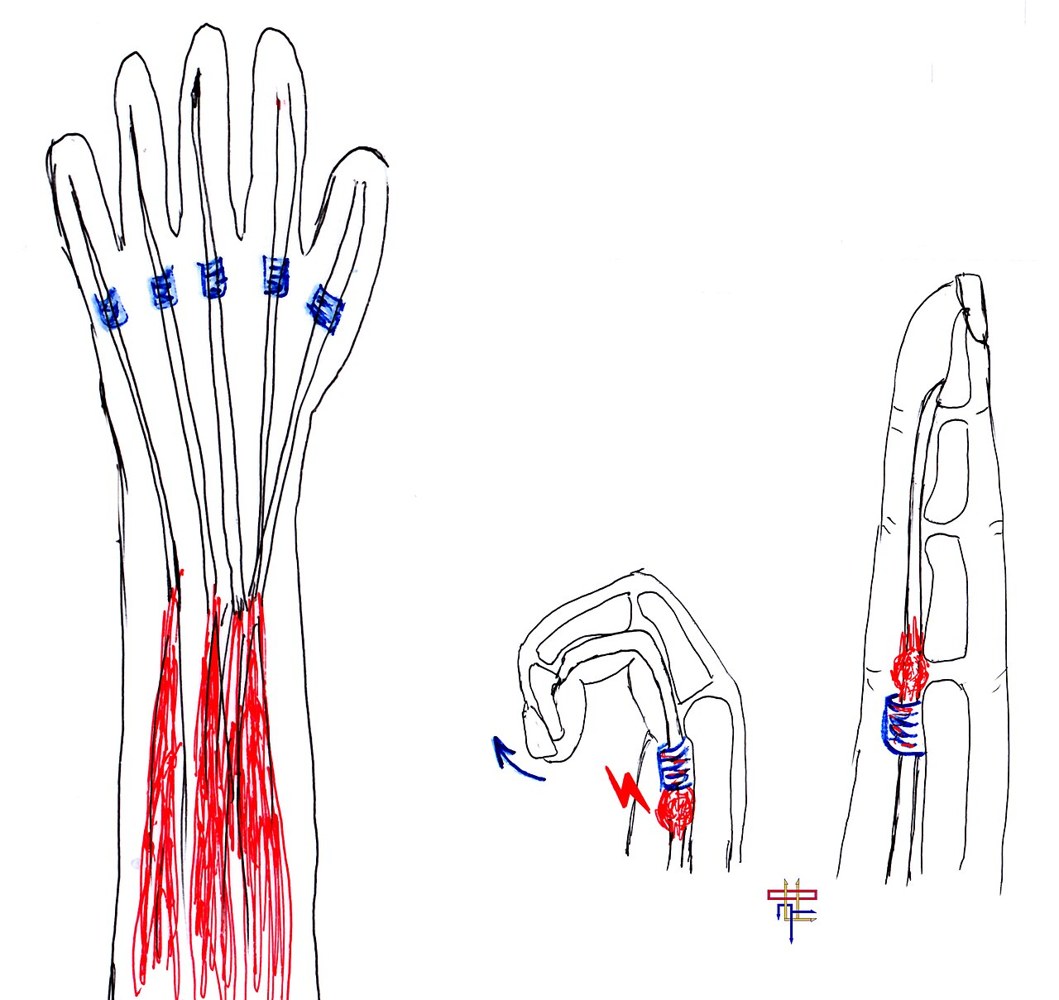
Surgery divides the A1 pulley along its length so the tendon glides freely. It is a short, highly effective operation, and the catching disappears on the operating table in most patients.
Indications for Surgery
- Persistent symptoms despite injection and splinting
- A finger that locks in flexion (stage 3 - 4)
- Recurrence after two injections
- Stubborn, multi-digit disease in patients with diabetes, where injection is less effective and surgery may be offered earlier
- Operating before a fixed flexion deformity develops reduces the risk of joint stiffness
Open Release
Through a 1 - 2 centimetre incision in the palm at the base of the finger, the A1 pulley is divided along its length under direct vision, and free gliding is confirmed by asking the patient to move the finger during the operation.
Because the digital sensory nerves run immediately alongside the incision, direct visualisation is the basis of safety. Inflamed tissue within the sheath can be debrided if required.
This is the standard and most reliable technique, with a very low recurrence rate.
Percutaneous Release
The A1 pulley is divided with the tip of a needle without a skin incision. The procedure is quick and leaves no scar.
The risks of nerve injury and incomplete release are higher than with open surgery, and it is therefore avoided in the thumb in particular, where the digital nerves lie very close to the pulley. Ultrasound guidance improves safety.
The Operation
- Performed under local anaesthesia as a day case; general anaesthesia is not required
- Operating time is 10 - 20 minutes
- The patient moves the finger immediately afterwards, and the catching is seen to have gone the same day
- Several fingers can be treated in one sitting
- Sutures are removed at 10 - 14 days
Risks & Complications
Trigger finger surgery is low risk and serious complications are uncommon. The proximity of the digital nerves to the incision nonetheless demands careful technique.
General Surgical Risks
- Wound infection: 1 - 2 per cent and usually superficial
- Bleeding and haematoma
- Wound healing problems and scar tenderness
- Transient effects of local anaesthesia
Risks Specific to This Operation
- Injury to the digital sensory nerves: rare, with higher risk in percutaneous release and in the thumb
- Incomplete release with persistent triggering, commonest after percutaneous release
- Recurrence: rare after open surgery, more likely in patients with diabetes
- Bowstringing if more of the pulley system is divided than necessary
- Temporary finger stiffness and swelling, prevented by early movement
- Tenderness over the palmar scar, usually settling within 2 - 3 months
- Complex regional pain syndrome: very rare
Rehabilitation
Rehabilitation is simple, and the key is moving the finger from day one to prevent adhesions around the tendon and joint stiffness.
0 - 2 Weeks
- The dressing is kept clean and dry and the hand elevated
- Finger movement is free and encouraged from day one: full fist and full extension several times a day
- Heavy gripping, squeezing and wet work are avoided
- Catching and locking usually disappear with the operation itself
2 - 6 Weeks
- Scar massage and moisturising after suture removal
- Graded gripping exercises with a soft ball or therapy putty
- Return to desk work within a few days; manual work at 3 - 4 weeks
- Hand therapy may be needed where surgery was performed on a fixed flexion deformity
6 Weeks and Beyond
- Full grip strength usually returns at 4 - 6 weeks
- Palmar scar tenderness may last a few months and improves with massage and desensitisation
- Healing may be slower in patients with diabetes, and glycaemic control affects the result directly
- Patients are advised that other fingers may become affected in due course
Is This Treatment Right for You?
Every patient's condition is different. After a detailed examination and imaging, the treatment plan that suits you best will be prepared.
Would you like more information about Trigger Finger?
Book Appointment