Frozen Shoulder (Adhesive Capsulitis)
Treatment of the progressive pain and loss of movement caused by thickening and contracture of the shoulder joint capsule
Overview
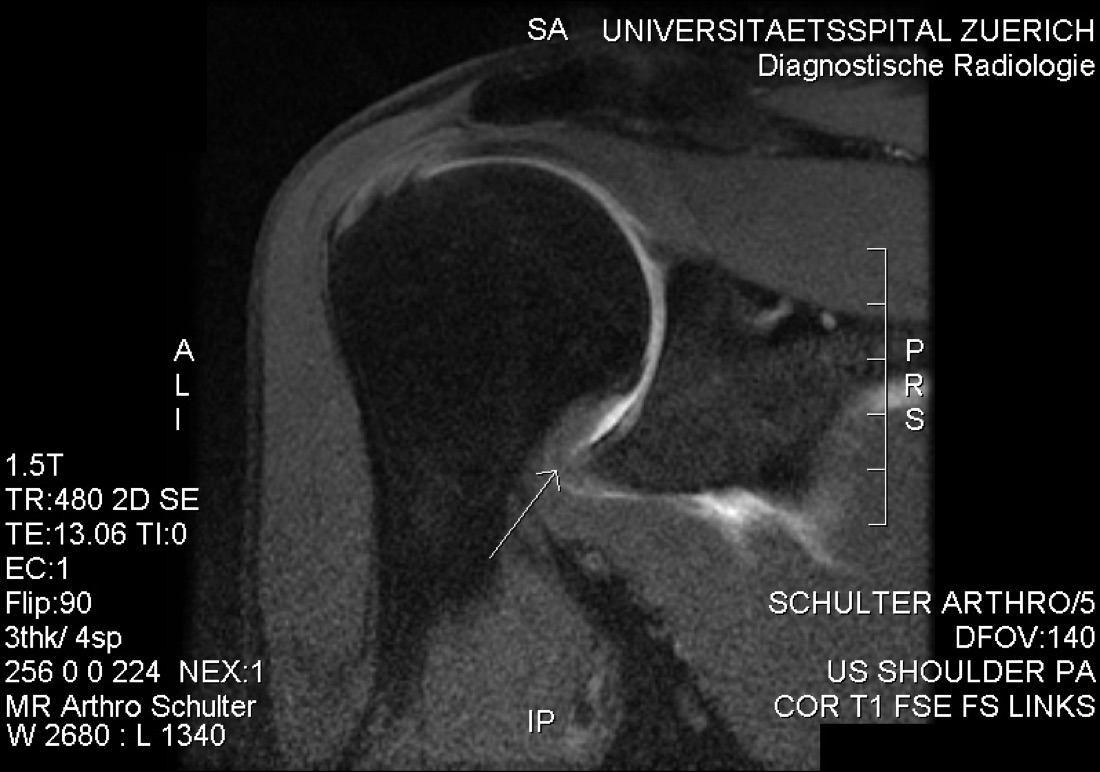
Frozen shoulder (adhesive capsulitis) is a condition in which the capsule surrounding the shoulder joint thickens and contracts, causing pain and a progressive loss of movement. It typically affects people aged 40 - 65 and is more common in women. Its defining feature is that both active movement (performed by the patient) and passive movement (performed by the examining doctor) are restricted to the same degree; this distinguishes it from rotator cuff disease. The condition progresses through stages and, even without treatment, largely resolves in most patients within 1 - 3 years; however, the course is long and demanding, and appropriate treatment both shortens it and reduces the risk of permanent loss of movement.
The Shoulder Capsule and How the Condition Develops
The shoulder is a ball-and-socket joint between the head of the humerus and the shallow glenoid of the shoulder blade. The capsule that encloses it is normally loose and elastic; this laxity is what allows the arm to move through such a wide range.
In adhesive capsulitis the capsule first becomes inflamed and then fibrotic (a scar-like stiffening). It thickens and contracts, and the loose inferior recess (axillary pouch) is obliterated. Joint volume falls markedly and the shoulder becomes mechanically locked.
Frozen shoulder is therefore not muscle weakness or a tendon tear, but a disease of the capsule itself. The patient cannot lift the arm not because the strength is lacking, but because the capsule will not allow it.
Primary and Secondary Frozen Shoulder
- Primary (idiopathic) frozen shoulder: Begins spontaneously with no identifiable cause. This is the most common type
- Secondary frozen shoulder: Linked to a known trigger — shoulder trauma, fracture, prolonged immobilisation after shoulder surgery, rotator cuff disease
- Associated with systemic disease: Diabetes (the strongest association), thyroid disease (hypo- and hyperthyroidism), Parkinson's disease, cardiovascular disease
- Frozen shoulder is markedly more common in people with diabetes than in the general population; in these patients the course may be more stubborn and the response to treatment slower
Stages of the Condition
Frozen shoulder progresses through four stages. The stage a patient is in directly determines the treatment, which makes staging the most important part of the treatment plan.
- Stage 1 — Painful onset (0 - 3 months): Insidious shoulder pain; range of movement is still largely preserved. Night pain is prominent
- Stage 2 — Freezing (3 - 9 months): The most painful phase; range of movement is lost rapidly. External rotation (turning the arm outwards) is particularly restricted
- Stage 3 — Frozen (9 - 15 months): Pain begins to settle but stiffness is at its worst. Everyday tasks become very difficult
- Stage 4 — Thawing (15 - 24 months): Range of movement is gradually regained. Full recovery may take 2 - 3 years
Symptoms
- Deep, dull shoulder pain: Radiating to the deltoid insertion and the upper outer arm
- Night pain: Inability to lie on the affected side; pain that wakes the patient. The most typical complaint of the early stage
- Progressive loss of movement: External rotation is lost first, followed by abduction (lifting the arm sideways) and internal rotation
- Difficulty with daily tasks: Combing hair, fastening a bra behind the back, reaching a back pocket, putting on a jacket, reaching a high shelf
- Equal restriction of active and passive movement: Neither the patient nor the examining doctor can move the arm through its full range — the distinguishing sign of the diagnosis
- Strength is generally preserved: The restriction comes from stiffness, not weakness
- Compensatory movement: The patient begins to use the shoulder blade and trunk to lift the arm
Diagnosis
The diagnosis is largely clinical. Age, the duration and course of symptoms, associated conditions (particularly diabetes and thyroid disease) and any previous shoulder injury or surgery are reviewed.
Active and passive ranges of movement are measured separately. Marked restriction of passive external rotation is the single most valuable sign of adhesive capsulitis; in a rotator cuff tear, passive movement is usually preserved while active movement is restricted.
Plain radiographs are normal in frozen shoulder; their purpose is to exclude other causes such as arthritis, calcific tendinitis or fracture. MRI is not required for the diagnosis but is requested if associated rotator cuff pathology is suspected; it may show capsular thickening and obliteration of the axillary recess. Blood glucose and thyroid function should be checked in every patient diagnosed — underlying diabetes or thyroid disease may come to light for the first time in this way.
Non-operative Treatment
Frozen shoulder is treated primarily without surgery, and the great majority of patients recover without an operation. Treatment is tailored to the stage: in the early stage the priority is pain control; in the later stages it is regaining movement.
- Patient education: Understanding that the condition is long but usually ends well markedly improves adherence to treatment
- Analgesics and anti-inflammatory medication (NSAIDs): Particularly in the early painful stage
- Intra-articular corticosteroid injection: When given early (within the first 6 months) it markedly reduces pain and makes physiotherapy easier. Ultrasound or fluoroscopic guidance improves accuracy
- Hydrodilatation (arthrographic distension): Saline, corticosteroid and local anaesthetic are injected under pressure to stretch the capsule. Effective in selected patients
- Physiotherapy and stretching: The foundation of treatment. Gentle, regular stretching within the limit of pain. Aggressive stretching that markedly increases pain can make the condition worse
- Home exercise programme: Short stretching sessions several times a day — pendulum exercises, finger walking up a wall, towel stretch for internal rotation
- Heat before exercise: Warming the muscles and capsule makes stretching more effective
- Control of diabetes and thyroid disease: Blood glucose control directly affects the response to treatment
- Corticosteroid injection combined with physiotherapy is superior to either treatment alone
Surgical Options
Surgery is considered when pain and restricted movement continue to affect daily life significantly despite at least 4 - 6 months of consistent non-operative treatment. Only a small proportion of patients with frozen shoulder need surgery.
- Arthroscopic capsular release: The preferred method today; the contracted parts of the capsule are divided in a controlled way
- Manipulation under anaesthesia (MUA): With the patient asleep, the arm is moved in controlled steps to stretch the capsule; used alone or in addition to arthroscopy
- Both procedures only succeed when followed by early, intensive physiotherapy; surgery on its own is not enough
Expected Outcomes
When managed correctly, frozen shoulder generally has a good outcome. Most patients regain a pain-free, functional shoulder within 1 - 3 years with non-operative treatment. Some are left with a mild permanent restriction, which usually does not affect daily life.
After surgery, range of movement usually improves markedly in the first weeks; keeping those gains depends entirely on adherence to rehabilitation. Recovery may be slower and recurrence more likely in patients with diabetes.
Surgery & First 3 Weeks
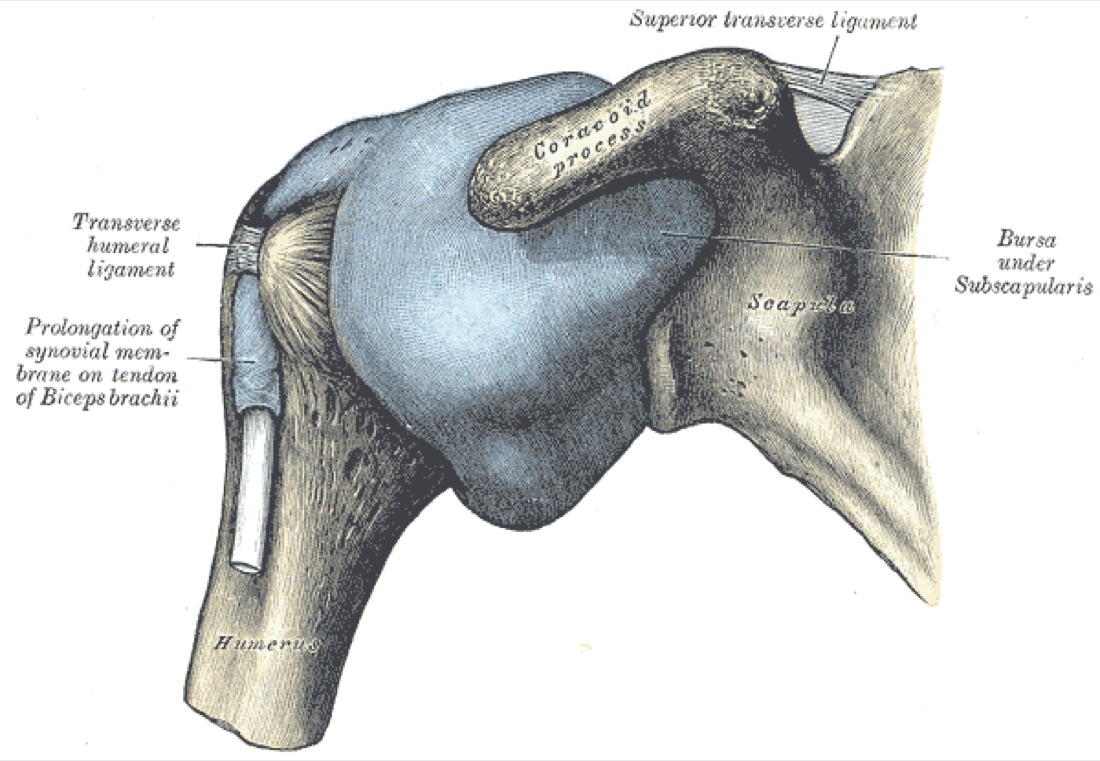
Surgery for frozen shoulder is performed when pain and stiffness persist despite at least 4 - 6 months of regular non-operative treatment. The aim is to release the contracted capsule and restore range of movement in a single session, and then to keep that movement through physiotherapy.
General Information About the Operation
The operation is performed under general anaesthesia, often combined with an interscalene block (a nerve block given in the neck). The block makes pain control much easier in the first 12 - 24 hours and allows physiotherapy to start early.
- Duration: 30 - 60 minutes
- Anaesthesia: General anaesthesia plus interscalene block
- Hospital stay: Usually day case or one night
- Blood glucose control before surgery directly affects success, particularly in patients with diabetes
Manipulation Under Anaesthesia (MUA)
- With the patient asleep, the arm is moved in controlled, graded steps and the contracted capsule is torn in a controlled way
- The usual sequence is flexion (forward elevation), then abduction, then external rotation and finally internal rotation
- No brute force is used; movement is slow and controlled. Excessive force can cause a humeral fracture or a rotator cuff tear
- Particular care is needed in patients with osteoporosis, diabetes or advanced age because of the fracture risk
- Today it is mostly used in addition to arthroscopic release rather than on its own
Arthroscopic Capsular Release — Surgical Technique
This is the preferred method. Because the capsule is divided in a controlled way, the risk of fracture is lower than with manipulation, and the surgeon can decide exactly which regions to release and by how much.
- The patient is positioned in the beach-chair or lateral decubitus position
- A camera is introduced through a posterior portal and the joint is inspected; the thickened capsule and reduced joint volume are seen directly
- Instruments are introduced through an anterior portal; the thickened tissue in the rotator interval and the coracohumeral ligament are released — this step markedly improves external rotation
- The anterior capsule is released downwards over the subscapularis tendon
- The inferior capsule (axillary pouch) is released with great care; the axillary nerve lies close by, making this the highest-risk step
- The posterior capsule is released if needed; this improves internal rotation
- Range of movement is tested on the table after the release and recorded
- Associated subacromial impingement or rotator cuff pathology is treated in the same session
Discharge Information
Patients usually go home the same day or the next day. Immobilising the arm in a sling is not appropriate after frozen shoulder surgery; the sling is used only for comfort in the first few hours and then discarded. Immobility leads to rapid loss of the movement gained.
Physiotherapy starts on the first day after surgery, and where possible on the same day. This is the key difference from other shoulder operations: here, early and vigorous movement is the recovery itself.
Ice is applied for 15 - 20 minutes three to four times a day. Analgesics, anti-inflammatory medication and stomach protection are prescribed. Pain control here is not simply about comfort — it is what makes the exercises possible. Stitches are removed at 10 - 14 days.
Early Postoperative Period (First 3 Weeks)
There is one priority in this period: not losing the range of movement gained on the operating table. The capsule tends to re-adhere, and this tendency is strongest in the first weeks.
- Exercise frequency: 4 - 6 times a day, stretching in every direction at each session. This programme is not advice — it is the treatment
- Directions: Forward elevation, abduction, external rotation and internal rotation, each worked separately
- Supervised physiotherapy: 3 - 5 sessions a week are recommended for the first 3 weeks
- No sling: Apart from the first few hours, the arm is left free and used for daily tasks
- Pain management: Taking analgesia and applying heat before exercise makes stretching easier; ice is applied afterwards
- Wound care: Portal sites are kept dry for the first 10 - 14 days; discharge, redness and warmth are monitored
- Daily life: Using the operated arm for eating, dressing and personal care is encouraged
- Blood glucose monitoring in patients with diabetes: Control may deteriorate after surgery and needs close attention
Follow-up
- Week 1: Range-of-movement measurement and review of the exercise programme
- Days 10 - 14: Removal of stitches
- Week 6: Range-of-movement check; assessment of whether gains have been maintained
- Month 3 and month 6 reviews
Risks & Complications
Surgery for frozen shoulder is a safe procedure and the rate of serious complications is low. It has, however, one specific risk: losing the movement that has been gained. This risk depends far more on adherence to rehabilitation than on surgical technique.
Risks Specific to Non-operative Treatment
- Duration: Even with treatment the condition may last 1 - 3 years, affecting work and social life
- Permanent restriction: Some patients are left with a mild permanent restriction, particularly of external rotation
- Temporary rise in blood glucose after corticosteroid injection (may last several days in patients with diabetes)
- Adverse effects of repeated corticosteroid injections on tendon tissue
- Aggressive stretching beyond the pain limit: Can increase inflammation and worsen the condition
Surgical Risks — Common
- Postoperative pain and swelling: May be marked in the first days because the capsule has been released
- Temporary change in sensation: Numbness and weakness of the arm from the interscalene block (usually resolves in 12 - 24 hours)
- Superficial portal infection (uncommon; usually treated with antibiotics)
- Temporary effects of anaesthesia such as nausea and dizziness
Surgical Risks — Less Common
- Recurrence of stiffness: The most important risk. If physiotherapy is not maintained, the movement gained can be lost within weeks. The risk is markedly higher in patients with diabetes
- Axillary nerve injury: May occur during release of the inferior capsule; causes deltoid weakness and loss of sensation over the outer shoulder (rare)
- Humeral fracture: Particularly with manipulation under anaesthesia, in patients with osteoporosis and in older patients
- Rotator cuff tear: May result from excessive force during manipulation
- Shoulder dislocation or labral injury: During manipulation (very rare)
- Deep joint infection (under 1%): Requires revision surgery and prolonged antibiotics
- Complex regional pain syndrome (CRPS): Rare; presents with pain, swelling and hypersensitivity
Risk Factors
- Diabetes: Markedly increases both the risk of developing the condition and the risk of recurrence; outcomes are worse when diabetes is poorly controlled
- Thyroid disease (hypo- and hyperthyroidism)
- A shoulder immobilised for a long period (after fracture or surgery)
- Advanced age and osteoporosis (fracture risk during manipulation)
- Poor adherence to physiotherapy — the most common cause of surgical failure
- Smoking
- A previous frozen shoulder on the other side
Contact Your Doctor Immediately If
- Pain or swelling suddenly increases
- You have a temperature above 38 °C
- There is discharge, a bad smell or opening of the wound
- Numbness, tingling or weakness in the arm or hand is progressing
- You cannot lift the arm or the shoulder suddenly looks deformed
- The movement gained after surgery is rapidly being lost
Long-term Outcomes
When correctly treated, frozen shoulder has high patient satisfaction. Most patients achieve a pain-free, functional shoulder with non-operative treatment. In those who undergo surgery, range of movement usually improves markedly within the first weeks.
A mild permanent restriction, particularly of external rotation, is possible; in most patients it does not affect daily life. Recurrence in the same shoulder is rare, but the risk of developing it in the other shoulder is higher than in the general population. Keeping diabetes and thyroid disease under control is a key determinant of long-term success.
Rehabilitation
In frozen shoulder, rehabilitation is not an add-on to treatment — it is the treatment. Unlike other shoulder operations, there is no repair to protect; on the contrary, early and regular movement is the only route to recovery. A shoulder that is left still quickly stiffens again.
Rehabilitation With Non-operative Treatment (By Stage)
- Stage 1 — Painful onset: Pain control comes first. Gentle pendulum exercises and stretching within the pain limit. Aggressive stretching is harmful at this stage. Corticosteroid injection is most effective at this stage.
- Stage 2 — Freezing: While maintaining pain control, a regular stretching programme is introduced, in short sessions 3 - 5 times a day. Heat is applied before stretching.
- Stage 3 — Frozen: As pain settles, stretching intensity can be increased. Joint mobilisation, prolonged low-load stretching and capsular stretching techniques come to the fore. Strengthening is added at this stage.
- Stage 4 — Thawing: As range returns, strengthening and functional exercises take priority. Scapular stabilisation and rotator cuff strengthening are added.
Rehabilitation After Surgery
- Week 0 - 1: Physiotherapy starts on the day of surgery or the next day. Stretching in all directions 4 - 6 times a day. No sling. Ice and pain control. The arm is used for daily tasks.
- Weeks 1 - 3: Stretching continues at the same intensity. Supervised physiotherapy 3 - 5 times a week. Range of movement is measured at every visit so that any loss is caught early.
- Weeks 3 - 6: If range has been largely maintained, light strengthening begins. Resistance-band work for the rotator cuff and scapular muscles. Stretching continues.
- Weeks 6 - 12: Strengthening intensifies. Full return to daily activities. The home exercise programme is continued independently.
- Months 3 - 6: Functional and sport-specific exercises. In most patients the shoulder is fully usable in daily life.
- Months 6 - 12: Full functional recovery. Some stretching exercises are continued long term to prevent recurrence.
Key Stretching Exercises
- Pendulum (Codman) exercise: Lean forward and let the arm hang freely, making gentle circles
- Finger walk: Walk the fingers up a wall to raise the arm
- Towel stretch for internal rotation: Hold a towel behind the back and pull it upwards with the good arm
- Doorway stretch for external rotation: Elbow bent to 90°, forearm against the door frame, slowly turn the trunk away
- Cross-body adduction stretch: Pull the arm across the front of the chest towards the opposite shoulder
- Stick-assisted stretch: The good arm moves the operated arm using a stick
- Hold each stretch for 20 - 30 seconds, 3 - 5 repetitions; work up to the pain limit, not beyond it
Lifestyle and Recovery Advice
- Do your home exercise programme several times a day — it is the single most important factor in the outcome of this condition
- Heat before exercise (a warm shower or warm towel) makes stretching easier; apply ice afterwards
- Take your painkiller before exercise; skipping stretching because of pain prolongs the process
- Do not avoid using the arm for daily tasks; protecting it increases stiffness
- If you have diabetes, keep your blood glucose tightly controlled — it directly affects the response to treatment
- Have your thyroid function checked; untreated thyroid disease prolongs the course
- Do not smoke
- Be patient: Recovery is measured in months, not weeks; most patients who work consistently achieve a good result
- If similar symptoms start in the other shoulder, seek advice early; treatment is much easier in the early stage
What to Expect
Most patients treated non-operatively achieve a pain-free, functional shoulder within 1 - 3 years. The process is long, but the outcome is usually good.
After surgery, a marked gain in range is seen in the first weeks; whether it lasts depends entirely on adherence to the exercise programme. A mild restriction of external rotation may remain but usually does not affect daily life. Recovery is slower in patients with diabetes and the programme is continued for longer.
Is This Treatment Right for You?
Every patient's condition is different. After a detailed examination and imaging, the treatment plan that suits you best will be prepared.
Would you like more information about Frozen Shoulder (Adhesive Capsulitis)?
Book Appointment